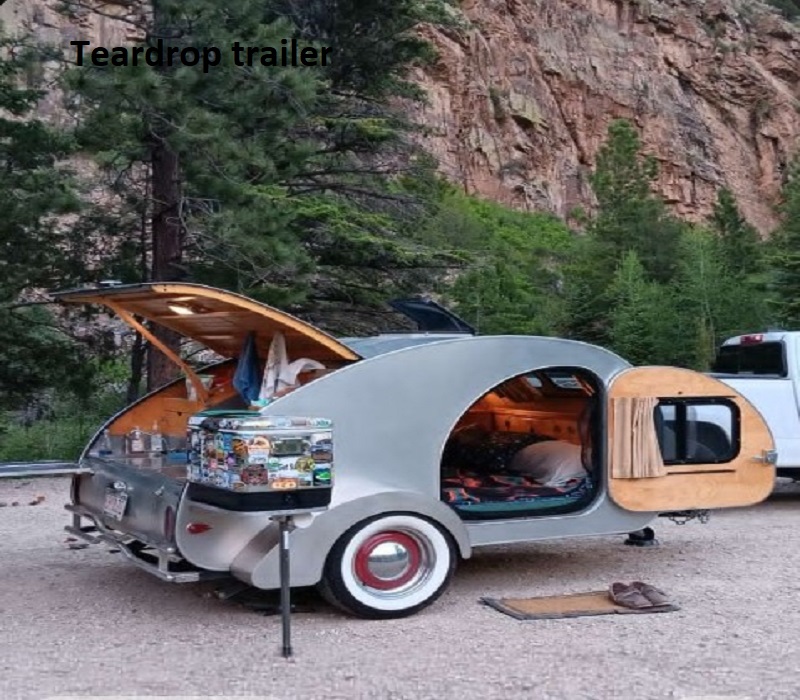
What Is a Teardrop Camper?
A teardrop camper is a small, lightweight travel trailer that you attach to the back of your car. It gets its name from its shape wide at the front and narrow at the back, just like a teardrop.
Inside, it has a comfortable bed for two people and a small kitchen at the rear. No bathroom, no living room just the basics you need for a great outdoor trip.
It is perfect for people who want more comfort than a tent but don’t want the hassle of a big RV. Lightweight, easy to tow, and simple to set up that’s the teardrop camper.
History of Teardrop Campers
Teardrop campers have a fascinating history that spans nearly a century starting from simple homemade trailers to modern, feature-packed compact campers.
The Beginning: 1930s
- Teardrop campers first appeared in the 1930s in America
- There were no commercial options available at that time
- Creative travelers built them by hand using wood and sheet metal
- They were attached to the back of early automobiles for road trips
- The goal was simple a dry, safe place to sleep while traveling
The Golden Era: 1940s & 1950s
- After World War 2, car culture exploded across America
- Families started taking weekend road trips in large numbers
- Teardrop trailers became popular because they were cheap and lightweight
- Many people still built them at home using DIY plans from magazines
- This era is considered the golden age of teardrop campers
The Decline: 1960s to 1990s
- Larger RVs and motorhomes entered the market
- People wanted more space, bathrooms, and comfort
- Teardrop campers were seen as too small and outdated
- Production slowed down and they almost disappeared completely
The comeback: 2000s
- A new generation of travelers discovered minimalism and adventure
- Fuel prices rose, making large RVs expensive to run
- Teardrop campers came back as the perfect budget-friendly option
- Small manufacturers started producing them commercially again
The Modern Era: 2010s to Today
- Today’s teardrop campers are nothing like the old wooden boxes
- They now come with solar panels, USB ports, LED lighting
- Modern kitchens, roof vents, and queen-size beds are standard
- Brands like NuCamp, Little Guy, and Airstream lead the market
- They are more popular than ever among solo travelers, couples, and weekend campers
Quick Timeline
| Year | Milestone |
| 1930s | First homemade teardrop trailers appear |
| 1940s-50s | Golden age mass popularity across America |
| 1960s-90s | Decline due to rise of large RVs |
| 2000s | Comeback begins with minimalism trend |
| 2010s+ | Modern teardrop campers with advanced features |
How Does a Teardrop Camper Work?
A teardrop camper works on a very simple concept: it is a small trailer that attaches to the back of your car using a tow hitch and travels with you wherever you go.
Attaching to Your Car
- A metal hitch ball is installed at the rear of your car
- The camper’s coupler locks onto that hitch ball
- Safety chains are attached for extra security
- That’s it no complicated setup needed
On the Road
- Your car pulls the camper along the highway
- It is so lightweight that most regular cars and SUVs can tow it
- You barely feel it behind you while driving
At the Campsite
- You park, unhitch, and your camper is ready
- Open the rear hatch for your kitchen
- Climb inside from the side door for sleeping
- No building, no assembly, no tent poles just arrive and relax
Power & Water
- A small battery or solar panel powers the lights and fan
- A built-in water tank supplies the sink in the kitchen
- Some models also support shore power hookup at campsites
What’s Inside a Teardrop Camper?
Don’t let the small size fool you a teardrop camper is smartly designed to give you everything you need for a comfortable outdoor trip.
Sleeping Area
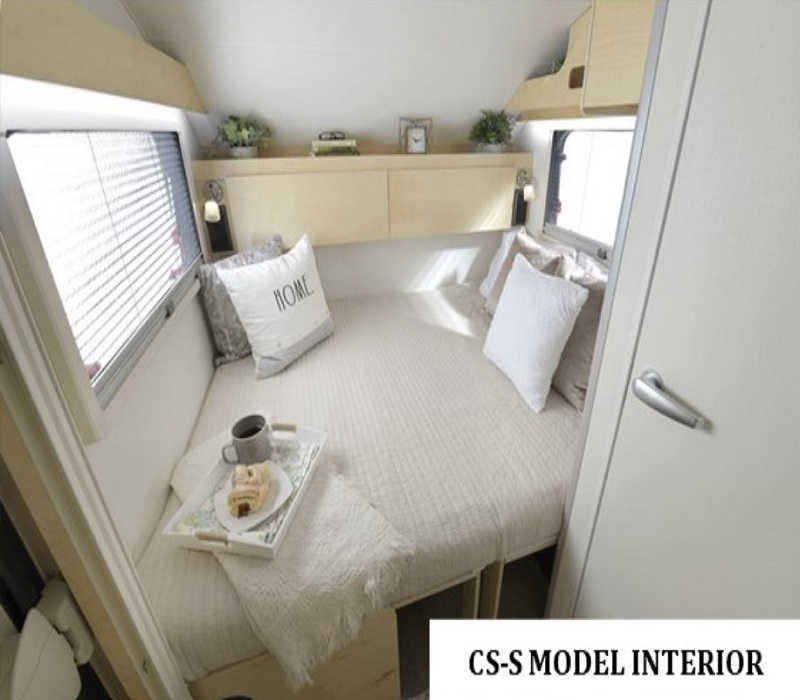
- A queen or double size mattress fits comfortably inside
- Designed for 2 adults to sleep without feeling cramped
- Soft interior walls and ceiling make it feel cozy and warm
- Side door gives easy access to climb in and out
Galley Kitchen
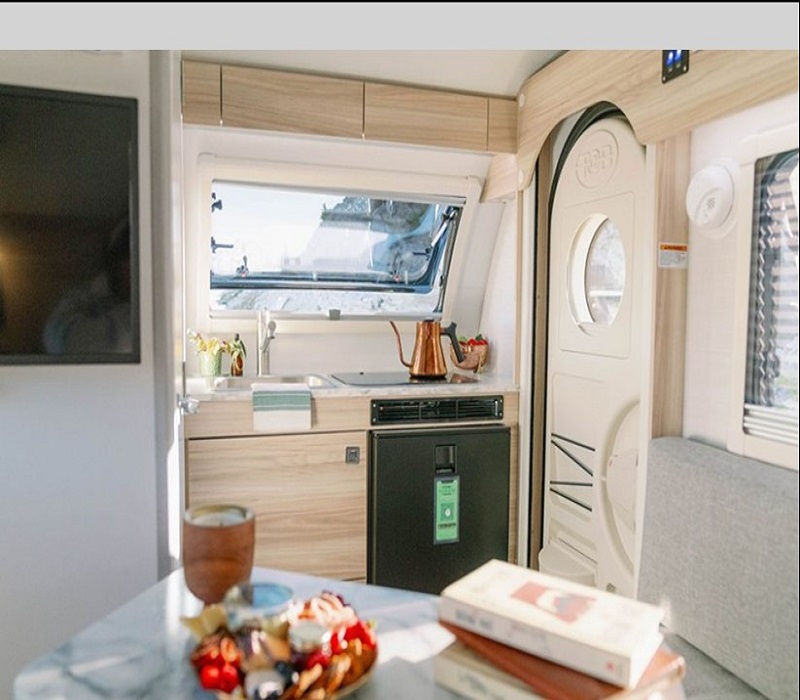
- Located at the rear of the camper opens with a hatch
- Comes with a 2 burner gas stove for cooking meals
- Small sink with a water tank for washing up
- Built in storage shelves and countertop for food prep
- Perfect for making coffee, breakfast or a quick dinner outdoors
Storage Space
- Cabinets are built above and below the bed
- Side pockets and small shelves for everyday items
- Storage is limited so you pack only what you truly need
- Some models offer exterior storage compartments as well
Ventilation System
- A rooftop fan keeps air circulating inside
- Works in both directions pulling fresh air in or pushing hot air out
- Runs quietly so it won’t disturb your sleep
- Keeps the interior cool even on warm nights
Windows & Lighting
- Screened windows on both sides allow fresh air and natural light
- Some models include a stargazer roof window to enjoy night sky
- LED lights inside for reading and general lighting
- USB ports and 12V outlets keep your devices charged overnight
Teardrop Camper Features Explained
Every teardrop camper is packed with smart, purpose built features that make outdoor living simple and comfortable. Here’s a closer look at what makes them work so well.
Roof Vent & Fan
The roof vent and fan is one of the most important features in a teardrop camper. Sleeping in a small enclosed space can get hot and stuffy this fan solves that problem completely.
- Sits on top of the camper and pulls fresh air in or pushes hot air out
- Runs on two speed settings so you control airflow
- Operates almost silently won’t disturb your sleep at all
- Works even in light rain without letting water inside
- Makes the interior feel fresh and comfortable throughout the night
Water Tank & Sink
No need to walk to a campsite water station every time you need water. The built-in water system keeps everything convenient right at your campsite.
- A freshwater tank is stored inside or underneath the camper
- Connected to a small sink located in the rear galley kitchen
- Used for washing hands, cleaning dishes and food prep
- Tank capacity is usually 5 to 10 gallons enough for a weekend trip
- Some models include a foot pump or electric pump to control water flow
Electrical System & USB Ports
Modern teardrop campers come with a surprisingly capable electrical setup keeping your devices charged and your lights running all night long.
- Powered by a 12V deep cycle battery or solar panel connection
- USB-A and USB-C ports built into the interior walls
- LED lighting runs off the same system very low power consumption
- Some models support shore power hookup at full-facility campsites
- Enough power to run the fan, lights and charge phones simultaneously
Rear Hatch Kitchen
The rear hatch kitchen is honestly the most unique and clever feature of any teardrop camper. Lift the hatch and your entire outdoor kitchen is ready in seconds.
- Hatch lifts up and acts as a weather cover while you cook
- Built-in 2 burner propane stove for cooking real meals
- Countertop space for food prep right next to the stove
- Shelves and cabinets keep spices, utensils and cookware organized
- Sink with running water sits right next to the cooking area
- The whole setup stays protected from wind and light rain under the open hatch
Teardrop Camper Size & Weight
Teardrop campers are specifically designed to be small, light and easy to manage but “small” doesn’t mean uncomfortable. Here’s a clear breakdown of their actual size and weight.
Interior Dimensions
The inside of a teardrop camper is compact but smartly used. Most standard models offer around 7 to 8 feet in length and 4 to 4.5 feet in width for the sleeping area. This is enough space for a queen or double mattress where two adults can sleep comfortably side by side. The ceiling height inside is usually around 2 to 3 feet meaning you can sit up in bed but you cannot stand up. This is completely normal for teardrop campers and is part of their lightweight, low-profile design.
Exterior Dimensions
From the outside, a typical teardrop camper measures around 8 to 10 feet in total length and stands approximately 4 to 5 feet tall. The width usually stays between 5 to 6 feet. Because of this low and narrow profile, teardrop campers create very little wind resistance on the road which means better fuel economy for your car compared to towing a larger trailer. They also fit easily in standard parking spots and most campsite spaces without any maneuvering headaches.
Towing Weight
This is where teardrop campers truly shine. Most models weigh between 900 to 2,000 pounds depending on the size and features included. This is significantly lighter than a traditional travel trailer which can easily exceed 5,000 pounds. Because of this low weight, almost any modern car, crossover or SUV with a basic tow hitch can pull a teardrop camper without any strain on the engine. You don’t need a truck, you don’t need a special license just a hitch and you’re good to go.
How Much Does a Teardrop Camper Cost?
Teardrop campers are one of the most affordable ways to enjoy comfortable outdoor travel. Whether you want to buy new, go used, or build your own there is an option for every budget.
New Teardrop Camper Price
- Entry-level basic models start from around $8,000 to $12,000
- Mid-range models with modern features cost between $12,000 to $20,000
- Premium models from top brands like NuCamp or Airstream can go up to $30,000 or more
- Higher price means better build quality, more features and longer warranty
- Most buyers find the $12,000 to $18,000 range offers the best value for money
Used Teardrop Camper Price
- A good used teardrop camper can be found for as low as $4,000 to $8,000
- Models that are 3 to 5 years old typically sell for 30% to 50% less than new price
- Always inspect for water damage, rust and worn seals before buying used
- Popular platforms to find used options include Facebook Marketplace, RV Trader and Craigslist
- Buying used is a smart option if you want to test camper life before investing in a new one
DIY Teardrop Camper Cost
- Building your own teardrop camper is the most budget-friendly option
- A basic DIY build can cost as little as $1,500 to $4,000 in materials
- Plans and blueprints are available online for free or under $50
- Main materials needed are wood, sheet metal, foam insulation and a trailer base
- DIY builds take anywhere from a few weekends to a few months depending on your skill level
- The result is a fully custom camper built exactly the way you want it
Teardrop Camper vs Other Campers
Not sure if a teardrop camper is the right choice for you? Here’s a simple side by side comparison to help you decide.
Teardrop Camper vs Tent
A tent is cheaper and more portable but it offers zero protection against bad weather, insects and cold nights. A teardrop camper on the other hand gives you a real bed, a solid roof over your head and a proper kitchen all things a tent simply cannot provide. If you want the outdoor experience without waking up with a sore back or getting soaked in the rain, a teardrop camper wins every time.
| Teardrop Camper | Tent | |
| Comfort | ✅ High | ❌ Low |
| Weather Protection | ✅ Yes | ❌ No |
| Setup Time | ✅ 2 minutes | ⚠️ 15-30 minutes |
| Cost | ⚠️ Higher | ✅ Cheap |
| Real Bed | ✅ Yes | ❌ No |
Teardrop Camper vs RV
An RV gives you everything bathroom, full kitchen, living room and standing space. But it also comes with a massive price tag, high fuel costs and the stress of driving and parking a vehicle the size of a bus. A teardrop camper is a fraction of the cost, gets much better fuel economy and can go places an RV simply cannot reach. For couples or solo travelers who don’t need all that extra space, a teardrop camper is the smarter and more practical choice.
| Teardrop Camper | RV | |
| Price | ✅ Affordable | ❌ Very Expensive |
| Fuel Economy | ✅ Great | ❌ Poor |
| Bathroom | ❌ No | ✅ Yes |
| Easy to Drive | ✅ Yes | ❌ No |
| Off-Road Access | ✅ Yes | ❌ Limited |
Teardrop Camper vs Pop-Up Camper
A pop-up camper offers more sleeping space and sometimes even a small bathroom but it takes time to set up, has fabric walls that wear out over time and is not as weather-tight as a teardrop. A teardrop camper is more durable, quicker to set up and lighter to tow. If you value simplicity and durability over extra space, the teardrop camper is the better option.
| Teardrop Camper | Pop-Up Camper | |
| Setup Time | ✅ 2 minutes | ❌ 20-30 minutes |
| Durability | ✅ High | ⚠️ Medium |
| Sleeping Space | ⚠️ Compact | ✅ More Space |
| Towing Weight | ✅ Very Light | ⚠️ Moderate |
| Weather Protection | ✅ Solid Walls | ⚠️ Fabric Walls |
Pros and Cons of a Teardrop Camper
Every camping option has its strengths and weaknesses. Here is an honest look at what a teardrop camper does well and where it falls short.
Pros
- Lightweight & Easy to Tow: Almost any car or SUV can pull it without any special towing setup or heavy duty truck
- Quick Setup: Arrive at your campsite, unhitch and you are done. No assembly, no tent poles, no stress
- Comfortable Sleep: A real queen size mattress means you wake up feeling rested instead of sore
- Fuel Efficient: Its small and aerodynamic shape creates very little drag, so your car fuel economy stays good on the road
- Affordable: Compared to a full RV or motorhome, a teardrop camper is a much more budget friendly investment
- Low Maintenance: Fewer systems, fewer things to break. Simple design means lower repair and upkeep costs
- Goes Anywhere: Small size means you can access remote campsites, forest roads and tight spots that big RVs cannot reach
- Durable Build: Hard shell construction protects you from rain, wind and cold far better than any tent or pop-up camper
Cons
- No Bathroom: Most teardrop campers do not have a toilet or shower. You rely on campsite facilities or outdoor solutions
- Cannot Stand Inside: The low ceiling means you can sit up but never stand. This takes some getting used to
- Limited Storage: Space is tight. You have to pack smart and leave unnecessary items at home
- Not Ideal for Families: Designed for one or two people. Families with kids will quickly feel cramped inside
- No Living Space: There is no couch, dining area or room to hang out inside during bad weather
- Cooking is Outdoors: The galley kitchen is at the rear and open to outside. Cooking in heavy rain or extreme cold can be uncomfortable
Who Should Buy a Teardrop Camper?
A teardrop camper is perfect for solo travelers and couples who want comfortable outdoor trips without the cost and complexity of a full RV. If you enjoy weekend getaways, road trips or exploring remote campsites this is built exactly for you.
It is also a great choice for people who want a lightweight, low-maintenance option that any regular car can tow. You don’t need a truck, a special license or a big budget to get started.
However, if you are traveling with kids, need a bathroom on board, or want space to stand and move around freely a teardrop camper will feel too small for your needs. It is designed for minimalists who believe the best part of camping is the destination, not the size of the trailer they bring.
Best Teardrop Camper Brands & Models
Here are three of the most popular and trusted teardrop camper models available today.
NuCamp Tab 320
The NuCamp Tab 320 is one of the best selling teardrop campers in America. It offers a comfortable queen size bed, a fully equipped rear kitchen, roof vent fan and a solid weatherproof build. Starting around $18,000 it gives you excellent quality for the price.
Little Guy Mini Max
The Little Guy Mini Max is perfect for people who want a bit more modern style. It comes with a spacious sleeping area, built in electrical system, USB ports and a sleek exterior design. Price starts around $14,000 making it a great mid range option.
Airstream Bambi
The Airstream Bambi is the premium choice for those who want luxury in a compact size. Famous for its iconic aluminum shell, it offers high end finishes, a full kitchen and superior build quality. Starting at around $45,000 it is the most expensive option but also the most prestigious.
Teardrop Camper Maintenance Tips
Keeping your teardrop camper in good shape is simple if you stay consistent. Here are the most important maintenance tips to follow.
Exterior Care
- Wash the exterior regularly to remove dirt, dust and road grime
- Check all seams and seals every few months for cracks or gaps
- Reseal any open seams immediately to prevent water damage
- Inspect the hitch, coupler and safety chains before every trip
- Check tires for proper air pressure and tread wear regularly
Interior Care
- Keep the interior dry at all times to prevent mold and mildew
- Wipe down walls and ceiling after trips if any moisture got inside
- Clean the mattress cover regularly and air it out after every trip
- Check interior cabinet hinges and latches to make sure nothing is loose
Kitchen & Water System
- Empty and clean the fresh water tank after every trip
- Run a mild cleaning solution through the tank every few months
- Clean the stove burners and countertop after each use
- Check the propane connections for leaks before every trip
Electrical System
- Check battery charge level regularly and recharge before storage
- Inspect all wiring and connections for corrosion or damage
- Test all lights, fan and USB ports before heading out on a trip
Storage Tips
- Store the camper in a covered or shaded area when not in use
- Use a quality camper cover to protect from sun, rain and dust
- Never store with a wet interior always dry completely before storage
- Lift the hatch slightly during long storage to allow air circulation inside
Conclusion:
Teardrop campers offer a simple, affordable, and comfortable way to enjoy outdoor adventures without the size and expense of a full RV. They’re perfect for couples and solo travelers who value lightweight towing and quick setup. If you love minimalism and weekend road trips, a teardrop camper is a smart choice.
Frequently Asked Questions
1. Do teardrop campers have bathrooms?
Most models do not. Campers usually use campground facilities or portable toilets.
2. What vehicle can tow a teardrop camper?
Most cars, crossovers, and small SUVs can tow them, depending on towing capacity.
3. Can you stand inside a teardrop camper?
No. You can sit up in bed, but standing is not possible.
4. How much does a teardrop camper cost?
Prices typically range from $8,000 to $30,000, depending on features and brand.
5. Are teardrop campers good for families?
They are best for solo travelers or couples, not large families.
For more: https://penthousemagazine.blog/