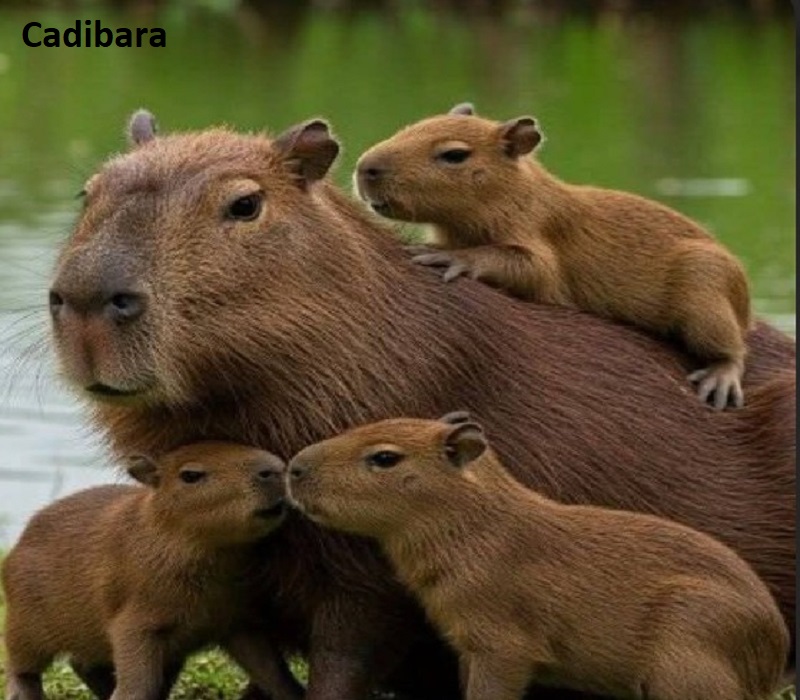
Introduction to Cadibara
Cadibara is not just an animal, it is a cultural phenomenon that has captured the hearts of millions worldwide. This barrel shaped, semi-aquatic giant roams the riverbanks and grasslands of South America, thriving in countries like Brazil, Venezuela, Colombia, and Argentina. Weighing up to 65 kilograms and standing nearly 2 feet tall, Cadibara is built for both land and water life. What makes Cadibara truly special is its extraordinary ability to coexist peacefully with other animals from birds sitting on its back to monkeys resting beside it. This unique personality transformed Cadibara from a South American wildlife species into a global internet icon, dominating platforms like TikTok, Instagram, and YouTube with millions of fans across every continent.
Origin and Natural Habitat
- Cadibara originally comes from South America and has been living in this region for millions of years.
- They are mostly found in countries like Brazil, Venezuela, Colombia, Argentina, Peru, and Bolivia.
- Cadibara is a semi-aquatic animal, which means it lives both on land and in water.
- They prefer to live near rivers, lakes, swamps, ponds, and wetlands where fresh water is easily available.
- Cadibara loves dense tropical forests and grassy plains (known as Savannas) near water bodies.
- The Amazon Rainforest is one of the most famous natural habitats of Cadibara.
- They are highly dependent on water they use it for cooling their body, escaping predators, and even mating.
- Cadibara lives in areas with a warm and humid climate, which is perfect for their semi-aquatic lifestyle.
- Due to deforestation and habitat loss, many natural Cadibara habitats in South America are now under serious threat.
- Cadibara has also been spotted in Panama and other parts of Central America, slowly expanding their range.
Physical Appearance and Unique Features
- Cadibara is the world’s largest rodent, even bigger than a beaver or a nutria.
- An adult Cadibara can weigh between 35 to 65 kilograms and grow up to 4 feet in length.
- They stand approximately 2 feet tall at the shoulder almost the size of a medium dog.
- Cadibara has a large, barrel-shaped body with a broad, flat head and a blunt nose.
- Their eyes, ears, and nostrils are positioned high on their head which helps them stay alert while swimming underwater.
- Cadibara has rough, short, brownish-gray fur that dries quickly after coming out of water.
- They have slightly webbed feet which make them excellent and fast swimmers.
- Cadibara has no tail which is a very unique feature compared to most other rodents.
- Their front teeth (incisors) are very large and sharp, which continuously grow throughout their life.
- Cadibara has four toes on the front feet and three toes on the back feet.
- They have scent glands on their nose called “morillo” which they use to mark their territory.
- Female Cadibaras are generally slightly larger than males which is rare in the animal kingdom.
- Their skin produces a natural oily substance that protects them from sunburn and keeps their skin moist.
Diet and Eating Habits
Cadibara is a strict herbivore, meaning it only eats plants and never consumes meat. Their primary food source is grass, and an adult Cadibara can eat up to 6 to 8 pounds of grass in a single day. They also feed on water plants, fruits, tree bark, and aquatic vegetation found near rivers and lakes.
Cadibara prefers to graze during early morning and late evening hours to avoid the intense heat of the day. They have strong, sharp teeth that continuously grow throughout their life, allowing them to chew tough grass and bark with ease. Their chewing motion is side-to-side, very similar to cows and horses.
One of the most unique habits of Cadibara is coprophagy; they eat their own feces to absorb extra nutrients and bacteria that help in digestion. In dry seasons when fresh grass becomes scarce, they shift to reeds, grains, and melons to survive. Cadibara also drinks large amounts of water daily and often eats water plants directly from rivers and ponds.
Diet and Eating Habits
Cadibara is a strict herbivore that mainly eats grass, water plants, fruits, and tree bark. An adult Cadibara can consume up to 6 to 8 pounds of grass daily, usually grazing in the early morning and late evening. One of their most unique habits is coprophagy — eating their own feces to absorb extra nutrients for digestion.
Reproduction and Life Cycle
Mating
- Cadibara can mate throughout the year, but mostly during the rainy season.
- Mating usually takes place in water.
- A dominant male leads the group and has the right to mate with females.
Pregnancy
- Female Cadibara’s pregnancy lasts around 150 to 160 days (approximately 5 months).
- A female can give birth to 2 to 8 babies at a time.
- Average litter size is 4 babies.
Birth
- Baby Cadibaras are called pups.
- Pups are born fully developed — they can walk, see, and hear from day one.
- They are born on land, not in water.
Early Life
- Pups start eating grass within their first week of life.
- They are nursed by their mother for about 3 to 4 months.
- The whole group helps in raising and protecting the pups.
Adulthood
- Cadibara reaches sexual maturity at around 12 to 18 months of age.
- A healthy Cadibara lives up to 8 to 10 years in the wild.
- In captivity, they can live up to 12 years.
Predators and Survival Strategies
Cadibara’s main predators include jaguars, anacondas, caimans, pumas, and eagles who hunt them in the wild. To survive, Cadibaras stay in large social groups so that more eyes can spot danger quickly. When threatened, they immediately run into water and can hold their breath for up to 5 minutes to hide from predators.
Relationship Between Cadibaras and Humans
| 🦫 Cadibaras | Relationship | Humans |
| Live peacefully in groups | Social Life | Humans also live in communities and societies |
| Communicate through sounds and scent | Communication | Humans communicate through language and gestures |
| Graze calmly near rivers | Daily Routine | Humans go to work and follow daily schedules |
| Protect their young in groups | Parenting | Humans raise children with family support |
| Run into water when threatened | Survival Instinct | Humans seek safety and shelter in danger |
| Share food within their group | Generosity | Humans share resources with family and friends |
| Live in specific territories | Territory | Humans build homes and establish boundaries |
| Rely on water for survival | Basic Needs | Humans also depend on water as a basic necessity |
| Bathe together in groups | Bonding | Humans socialize and relax together |
| Dominant male leads the group | Leadership | Humans follow leaders in society and government |
Cadibaras in Social Media and Memes
Cadibara’s social media journey began quietly but quickly exploded into a global phenomenon that no one saw coming. Back in 2022, cadibara memes took over TikTok overnight and a catchy song soon followed, making this giant rodent an instant internet sensation. Toy companies started making cadibara stuffed animals, with one selling out in just two days and Dazed magazine even declared 2022 “the year of the cadibara.”
The real turning point came when a song by a Russian artist went viral on TikTok, featuring the repeated lyrics “Ca-py-bara capybara” a simple but addictive earworm that pushed cadibara deep into mainstream culture worldwide. From that moment, there was no stopping this gentle giant’s internet domination.
The numbers speak for themselves the hashtag #cadibara alone accumulated a staggering 5.7 billion views on TikTok. Major brands like Ryanair, Aldi, and M&S jumped on the trend by photoshopping cadibaras into their content. Even Chester Zoo used the trending song in a cadibara video that earned 4 million views and 700,000 likes in just one week.
By 2026, the craze is still going stronger than ever. A viral post about the upcoming Cadibara Simulator game on Steam set TikTok and X ablaze proving that cadibara’s “chill” identity has now crossed from memes into the gaming world. A new wedding trend also took over TikTok with the phrase “if your wedding doesn’t have cadibaras… don’t invite me” showing that cadibara culture has now entered everyday life and celebrations.
However, not everything is fun and games. With over 750,000 TikTok videos under the hashtag “cadibara,” wildlife experts are now raising serious concerns that this massive online popularity is leading to increased exploitation of cadibaras in the wild a dark side to this otherwise heartwarming internet story.
Can Cadibaras Be Kept as Pets?
Cadibaras can be kept as pets in some countries like the USA, Japan, and parts of Europe, but it is not recommended for everyone. They are wild animals that need large open spaces, constant access to water, and social companions making them very difficult and expensive to maintain as pets.
Conservation Status and Threats
Conservation Status
- Cadibara is currently listed as “Least Concern” on the IUCN Red List.
- Their population is stable in most parts of South America.
- However, in some regions their numbers are slowly declining.
Main Threats
- Deforestation: cutting down forests is destroying their natural habitat.
- Illegal Hunting: they are hunted for their meat, skin, and fat.
- Habitat Loss: wetlands and riverbanks are being destroyed for farming and construction.
- Climate Change: droughts and floods are affecting their food and water supply.
- Illegal Pet Trade: increasing internet fame has led to more people capturing them illegally.
- Pollution: water pollution in rivers and lakes is directly affecting their health.
Conservation Efforts
- Many wildlife organizations in Brazil and Venezuela are actively protecting cadibara habitats.
- Hunting bans have been introduced in several South American countries.
- Eco-tourism programs are helping local communities earn money by protecting cadibaras instead of hunting them.
- International awareness through social media is also helping in cadibara conservation efforts.
Conclusion: The Journey from Jungle to Internet Fame
The cadibara is truly one of nature’s most remarkable creatures a giant, gentle, and unbothered animal that has won the hearts of millions around the world. From roaming the riverbanks of the Amazon rainforest to dominating TikTok with billions of views, the cadibara’s journey is unlike anything the animal kingdom has ever seen. It taught the world that peace, patience, and kindness are the most powerful traits whether you are a wild animal or a human being. As long as we protect their natural habitat and respect their wild nature, cadibaras will continue to inspire, entertain, and remind us all to just… chill.
FAQs
1. What is a capybara?
A capybara is the largest rodent in the world and is native to South America. It is a semi-aquatic animal that lives near rivers, lakes, and wetlands.
2. Why are capybaras famous on the internet?
Capybaras became famous on the internet because of their calm personality and viral memes on platforms like TikTok, Instagram, and YouTube.
3. Where do capybaras live?
Capybaras mainly live in South American countries such as Brazil, Venezuela, Colombia, Argentina, and Peru, usually near water bodies.
4. What do capybaras eat?
Capybaras are herbivores and mostly eat grass, water plants, fruits, and tree bark.
5. Can capybaras be kept as pets?
Capybaras can be kept as pets in some countries, but they require large spaces, water access, and social companions, which makes them difficult to maintain.
For more: https://penthousemagazine.blog/