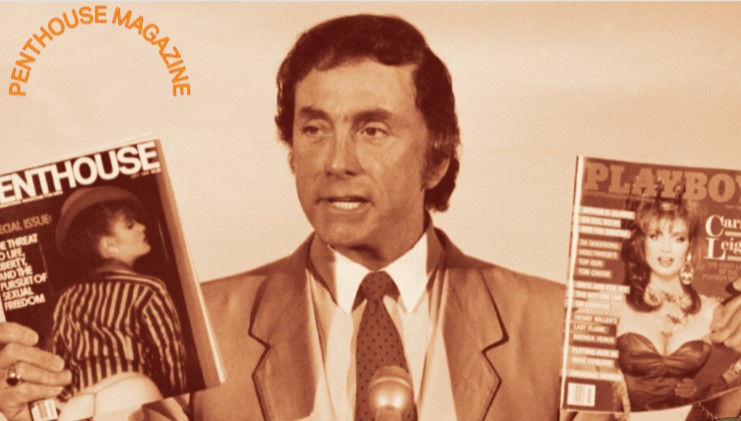
What Is Penthouse Magazine?
Penthouse Magazine is one of the most recognized adult publications in the world. It was launched in 1965 and for decades it was not just a magazine it was a cultural statement. At a time when society was slowly opening up to conversations around sexuality and free expression, Penthouse walked in and pushed every boundary it could find.
The magazine was built on two things: bold photography and fearless editorial content. While most people associate it with adult imagery, Penthouse also ran serious investigative journalism, political commentary, and celebrity interviews. It was never just one thing that was the whole point.
Founded in the United Kingdom, it later made its way to the United States where it became a direct competitor to the already established Playboy. The difference was simple Penthouse was more explicit, more daring, and less polished. It did not try to be sophisticated. It tried to be honest, raw, and unapologetic.
At its peak, Penthouse was selling millions of copies every month across multiple countries. It had a massive readership, major advertisers, and serious cultural influence. Celebrities appeared in its pages, famous writers contributed to it, and governments took notice of what it published.
The Man Behind the Magazine: Bob Guccione
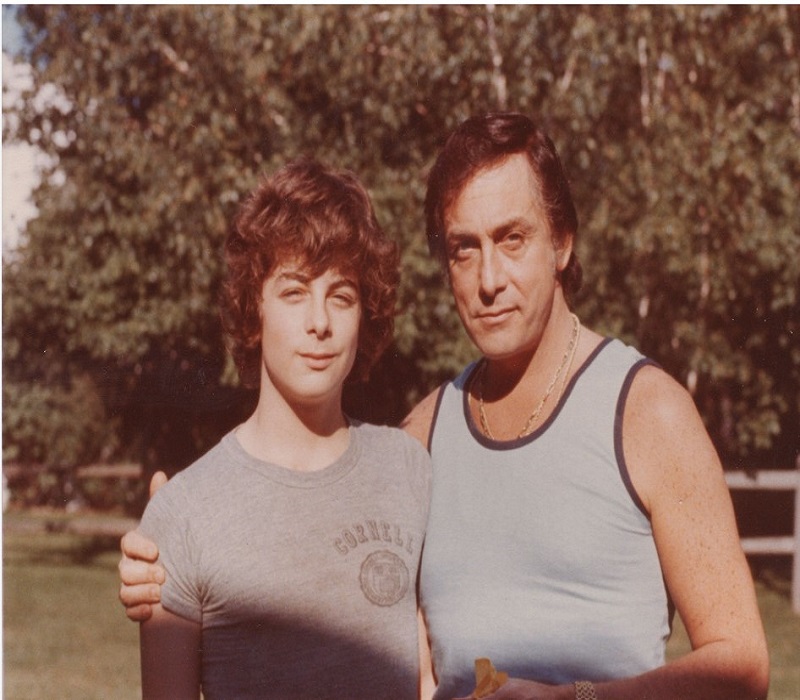
Early Life and Background
Bob Guccione was born on December 17, 1930 in Brooklyn, New York. He grew up in a modest household and from an early age he was drawn to painting and visual arts. His family was of Italian descent and he was raised Catholic in New Jersey. Nothing about his early life suggested he would one day run a global media empire.
Life Before Penthouse
Before launching Penthouse, Guccione spent years in Europe trying to establish himself as an artist. He had no publishing background, no major connections, and very little money. He worked various jobs just to get by. But during this time he was observing the media landscape closely and forming ideas about what was missing from it.
The Idea That Started Everything
Guccione noticed that Playboy had built a massive audience but he felt it was too polished and too safe. He believed people wanted something rawer, more honest, and more provocative. That gap in the market became his opportunity. He was not trying to copy Playboy he was trying to challenge it directly.
Building Penthouse From Scratch
In 1965 he launched Penthouse in London with almost no resources. He personally photographed the models in the early issues because hiring professional photographers was not affordable. His hands-on involvement gave the magazine a unique visual identity that immediately stood out. It was not perfect but it was different and different was exactly what he needed.
Rise to Power and Wealth
As Penthouse grew in the UK and later in the United States, Guccione became one of the most powerful figures in publishing. By the early 1980s he had made the Forbes 400 list and owned one of the largest private mansions in Manhattan. He expanded into other magazines, film production, and several other business ventures.
The Fall
His ambitions eventually worked against him. Failed investments including a casino project that lost over $160 million and the rise of free internet content in the 1990s destroyed his business model. By 2003 he was forced to file for bankruptcy and resign from the company he had built. He lost his mansion, his art collection, and his empire.
Final Years and Death
After losing everything Guccione moved to Texas and lived quietly. He returned to painting in his final years the same thing he had started with decades earlier. He passed away on October 20, 2010 from cancer at the age of 79. His legacy remains complicated but his impact on media and publishing is undeniable.
How It All Started in London (1965)
When Penthouse hit the stands in London, the reaction was mixed. Some people were shocked, some were curious, and some were outright angry. The British public was not used to seeing this kind of content openly available on newsstands. Religious groups objected, conservative voices criticized it, but none of that stopped people from picking it up. Controversy was doing the marketing for free.
At the time the UK already had some men’s publications but nothing that came close to what Penthouse was offering. The competition was either too tame or too underground. Penthouse sat right in the middle openly sold, visually bold, and editorially sharp. That positioning gave it a unique space in the market that no other publication was occupying.
The growth did not happen overnight but it was steady and strong. Within a few years Penthouse had built a loyal readership across the UK and was expanding its reach into Europe. By the late 1960s it had outsold every other men’s magazine in British publishing history. What started as a risky one-man project in London had turned into a legitimate publishing force and Guccione was just getting started.
Penthouse Lands in America (1969)
By the late 1960s Penthouse was already dominating the UK market and Guccione had his eyes set on America. The opportunity came when reports surfaced that British Penthouse was outselling Playboy among American troops stationed in Vietnam. That was the signal Guccione needed there was clearly an appetite for his magazine in the United States.
In September 1969 the first American edition of Penthouse was published. Guccione did not enter the US market quietly. He directly named Playboy as his competition and even wrote an open letter in the first issue explaining exactly how Penthouse was different and why it deserved a place in the American market. It was a bold and unusual move but it worked in his favor.
For the American launch Guccione partnered with Kathy Keeton, who became one of the most important figures in the company’s growth. She served as a key business partner and later became Vice Chairman of the parent company General Media. Alongside her, Guccione built a small but focused team in New York that handled distribution, advertising, and editorial operations for the US edition.
The first American issue printed 375,000 copies and outsold major publications like Time, Newsweek, and Esquire on the stands. By December of that same year they were already printing 500,000 copies to meet demand. The American audience had welcomed Penthouse with open arms and Guccione’s gamble had paid off completely.
The Golden Era: When Penthouse Ruled the World
The 1970s were Penthouse at its absolute best. Circulation was climbing every year and by 1979 the magazine had reached nearly 5 million copies per month. It was not just selling well, it was dominating. For several years in the late 1970s Penthouse actually outsold Playboy which was considered almost impossible given Playboy’s head start and brand strength.
The magazine attracted serious writers during this period. Names like Stephen King, Isaac Asimov, Gore Vidal and Philip Roth all contributed to its pages. This gave Penthouse a credibility that went beyond adult content entirely.
| Year | Milestone |
| 1970s | Circulation growing rapidly across US and Europe |
| 1975 | Guccione honored by Brandeis University for editorial work |
| 1979 | Peak circulation hits nearly 5 million copies per month |
| 1982 | Guccione listed on Forbes 400 wealthiest people list |
| 1986 | General Media publishing 15 magazines including Omni |
By 1982 Guccione’s company General Media was publishing 15 magazines and his personal wealth was at its highest point. Celebrities appeared in its pages, advertisers lined up, and Penthouse was being read across America, Europe and beyond. This was the golden era and it would not last forever.
More Than Just Photos: The Journalism Side of Penthouse
Most people remember Penthouse for its photography but very few know that the magazine ran some seriously bold investigative journalism throughout its history. Guccione believed a men’s magazine could be both provocative and intellectually serious at the same time and he proved it.
Political and Government Exposure
Penthouse regularly published stories on government corruption and political scandals that mainstream media was often too cautious to touch. Writers like Seymour Hersh, one of the most respected investigative journalists in America, contributed to its pages. The magazine exposed high level corruption in the US government at a time when doing so carried real risk.
Religious Scandals
Penthouse was one of the first publications to go after powerful religious figures publicly. It revealed details about televangelist Jerry Falwell and exposed the sexual misconduct of minister Jimmy Swaggart. These were stories that other publications avoided but Penthouse published without hesitation.
Vietnam and Social Issues
The magazine covered the Vietnam War with an unfiltered lens when most mainstream media was playing it safe. In 1975 Guccione was actually honored by Brandeis University for focusing editorial attention on the welfare of Vietnam veterans and problems of crime in modern society recognition that does not come to a publication that only prints photographs.
The Unabomber Moment
One of the strangest journalism stories in Penthouse history came when the Unabomber named the magazine as his third choice for publishing his anti-technology manuscript. Guccione responded by offering him an unedited monthly column in exchange for stopping his attacks. The offer became irrelevant after the Unabomber was captured shortly after.
The Controversies That Defined Penthouse
Penthouse was never a quiet publication. From its very first issue it attracted attention, debate, and outrage. But some controversies went beyond normal criticism and left a permanent mark on the magazine’s history.
The Traci Lords Scandal (1984)
This was arguably the most serious controversy in Penthouse history. The September 1984 issue featured Traci Lords as its centerfold. At the time nobody questioned her age. It was later revealed that Lords was only 16 years old when the photos were taken, making it one of the most damaging legal and ethical scandals the magazine ever faced.
Madonna and Vanessa Williams
Penthouse published photos of both Madonna and Vanessa Williams without their full consent. Both sets of photos were taken earlier in their careers and sold to the magazine after they became famous. Vanessa Williams, who was Miss America at the time, was forced to resign from her title after the photos were published in 1984. The incident caused a massive public uproar.
The La Costa Lawsuit (1975)
Penthouse published an investigative piece claiming that the La Costa Resort in California had connections to organized crime figures. The resort owners sued the magazine for defamation. The legal battle lasted nearly a decade and cost both sides an estimated $20 million in litigation costs before it was eventually settled.
Feminist Protests (1984)
In December 1984 a group of radical feminists launched what they called a National Rampage against Penthouse. They entered stores, tore up copies of the magazine, and burned an effigy of Bob Guccione outside a bookstore in Wisconsin. The protests continued for months and brought significant negative attention to the publication.
The Hardcore Shift (1997)
In 1997 Penthouse made a desperate decision to switch to fully explicit hardcore content in an attempt to boost declining sales. The move backfired badly. Major advertisers immediately pulled out and the magazine lost the mainstream credibility it had spent decades building. Instead of saving the magazine it accelerated its decline.
Vanessa Williams (1983)
In 1983 she became Miss America. Before her fame she had done some modeling and photos were taken. In 1984 Penthouse published those photos without her consent. The scandal was massive and she was forced to resign from her Miss America title. She later made a successful comeback in music and acting.
Madonna (1970)
In the 1970s when she was a struggling artist she did some modeling work. In 1985 when she was already the biggest pop star in the world Penthouse and Playboy both published those old photos. Madonna publicly said she had no regrets but the photos were clearly published without her approval.
Paula Jones (1998)
She was the woman who accused Bill Clinton of sexual harassment. In 1998 during the height of the Clinton scandal she posed for Penthouse reportedly for $100,000. It was a controversial decision and she received a lot of public criticism for it.
Valerie Bertinelli
She was a popular TV actress. Her name got connected to Penthouse but her photos were never actually published. The magazine reportedly approached her but nothing came of it.
The Caligula Film (1979)
Guccione personally financed the film Caligula using around $17.5 million of his own money. The film starred Malcolm McDowell and Helen Mirren but became infamous for its graphic sexual and violent content. It was condemned by critics, rejected by mainstream cinema, and damaged Guccione’s reputation significantly even though it did generate some revenue.
When the Internet Changed Everything
The 1990s brought something Penthouse had no answer for the internet. Free adult content became available online and suddenly people had no reason to pay for a magazine. Circulation that had peaked at nearly 5 million in 1979 had dropped to just over 1 million by 1995. The same year the magazine recorded a loss for the very first time in its history.
Guccione tried to fight back. He launched an online platform in 1995 and it briefly became one of the 25 most visited websites on the internet. But free content was always one click away and paid subscriptions were a hard sell in that environment.
By 2002 Penthouse was down to just 530,000 subscribers. A magazine that once outsold Time, Newsweek and Playboy was now struggling to stay relevant. The internet had not just hurt Penthouse it had fundamentally destroyed the business model the magazine was built on.
The Long Road to Bankruptcy
The financial collapse of Penthouse did not happen overnight. It was a slow and painful decline that stretched across nearly a decade before the final breaking point arrived.
The trouble really began in the early 1990s when circulation started dropping steadily. Guccione responded the way he always had by spending more. He poured money into the business hoping to reverse the trend but the problem was not something money could fix. The audience was leaving and it was not coming back.
The casino project was perhaps the single biggest financial mistake of his career. Guccione invested over $160 million into building a casino in Atlantic City. Construction began but the project ran into legal and financial complications and was eventually abandoned completely. The losses from that one venture alone were enough to cripple the company.
Then in 1997 came the decision to shift to hardcore explicit content. The thinking was simple: if people want more explicit material, give it to them. But the move destroyed advertiser relationships that had taken decades to build. Major brands walked away and never came back. The revenue loss from advertising was devastating.
By 2003 the situation was beyond recovery. General Media, the parent company of Penthouse, filed for Chapter 11 bankruptcy protection. Guccione was forced out of the company he had built from nothing. His personal assets including his famous Manhattan mansion and his valuable art collection were seized to cover debts.
Who Owned Penthouse and When?
Penthouse has changed hands multiple times over the years. Here is a simple breakdown of who owned it and when.
Bob Guccione (1965 – 2003) The original founder ran the magazine for nearly four decades through his company General Media. He built it from zero and lost it the same way through bad investments and a changing industry.
FriendFinder Networks (2007) After bankruptcy a company called FriendFinder Networks purchased Penthouse. They were mainly an online adult platform and their focus was more on the digital side than print. Under them the magazine continued but without much energy or direction.
PHSL and Marc Bell (2011) A group led by businessman Marc Bell acquired Penthouse from FriendFinder. Bell had plans to revive the brand and expand it beyond just a magazine. Some digital moves were made but the print side kept struggling.
Kelly Holland (CEO Era) During the later years Kelly Holland served as CEO and tried to modernize the brand. She pushed for more digital content and tried to reposition Penthouse as a lifestyle brand rather than just an adult magazine.
Current Ownership As of recent years the Penthouse brand and its assets are held under AEBN related ownership structures focused mostly on digital content licensing and the Penthouse name as a brand rather than an active publication.
The End of Print: Last Issue and What Happened Next
After decades on newsstands, Penthouse finally printed its last physical issue in 2016. A magazine that once sold 5 million copies a month ended quietly with almost no major announcement. No farewell issue, no big goodbye, it just stopped.
By that point the print version was selling only a fraction of what it once did. Keeping it alive on paper was costing more than it was making. The decision to pull the plug on print was not surprising; it was just a matter of when.
After the last issue the brand moved fully online. The Penthouse website became the main product and the focus shifted to digital subscriptions, video content, and licensing the brand name. The iconic Penthouse brand was now basically a digital platform, a very different thing from what Guccione had originally built.
The Penthouse Club brand also continued separately. Gentleman’s clubs operating under the Penthouse name exist in several cities and generate revenue through the brand’s name recognition even though they have no real connection to the original magazine.
What happened next was mostly about survival through branding. The actual magazine, the journalism, the photography, the editorial voice all of that was gone. What remained was just the name and the logo being used to sell digital content and license deals.
Where Does Penthouse Stand in 2026?
Penthouse in 2026 is basically just a brand name with nothing solid behind it.
The print edition is gone. The website is still running but it is nothing compared to what the magazine once was. Some Penthouse Club venues operate in a few cities using the brand name but that is about it.
No strong editorial team, no real print comeback, no clear direction. The ownership keeps shifting and nobody seems to have a genuine plan to bring it back properly.
It is a famous name being used to sell digital content and licensing deals. That is all that is left of a magazine that once outsold every major publication in America
Final Verdict: Legacy of a Controversial Publication
Penthouse was bold, controversial, and unlike anything before it. It changed publishing, beat Playboy at its own game, and gave serious journalism a platform nobody expected from an adult magazine.
But bad decisions, failed investments, and the internet finished it off completely.
FAQs
Who started Penthouse and why?
Bob Guccione started it in 1965 because he felt Playboy was too safe and polished. He wanted something rawer and more honest.
Did Penthouse ever outsell Playboy?
Yes it did. In the late 1970s Penthouse was selling more copies than Playboy every month which nobody expected.
What killed Penthouse?
The internet killed its sales, a failed casino drained its money, and going hardcore lost all its advertisers. Everything hit at once.
What was the worst scandal in Penthouse history?
The Traci Lords scandal in 1984 where it was later revealed she was only 16 when her photos were taken. It was the most damaging moment legally and ethically.
What is left of Penthouse today? J
ust the brand name. A website, some licensing deals, and Penthouse Club venues in a few cities. The actual magazine is gone.
For more: https://penthousemagazine.blog/